

The 11 competency domains for General Practice serve as a cornerstone for assessing the aptitude and suitability of candidates for the role of a GP trainee in Ireland. These domains encompass a comprehensive set of skills and attributes essential for providing high-quality primary care. They have been carefully curated to capture the essence of what makes an effective and compassionate general practitioner, including communication, medical knowledge, ethical practice, and the ability to cope with pressure, among others. These domains not only guide training and professional development but also form the basis for selecting candidates into GP training programs.
The interview process for selecting GP trainees in Ireland has been updated to better reflect real-life practice and assess candidates more effectively. In 2026, the process will include three online simulation stations, each lasting 10 minutes, where candidates will interact with actors playing the role of a patient, patient’s relative, or a colleague.
These scenarios are designed to assess how well candidates apply key competency domains in practical, real-world situations that a general practitioner might encounter. While the format is different from previous years, the focus remains on evaluating essential skills such as communication, professionalism, clinical reasoning, and decision-making.
Each station targets different aspects of these competencies, and together they make up 40% of the overall interview score. Understanding and preparing for these domains is essential for anyone aiming to succeed in the highly competitive GP training selection process in Ireland.
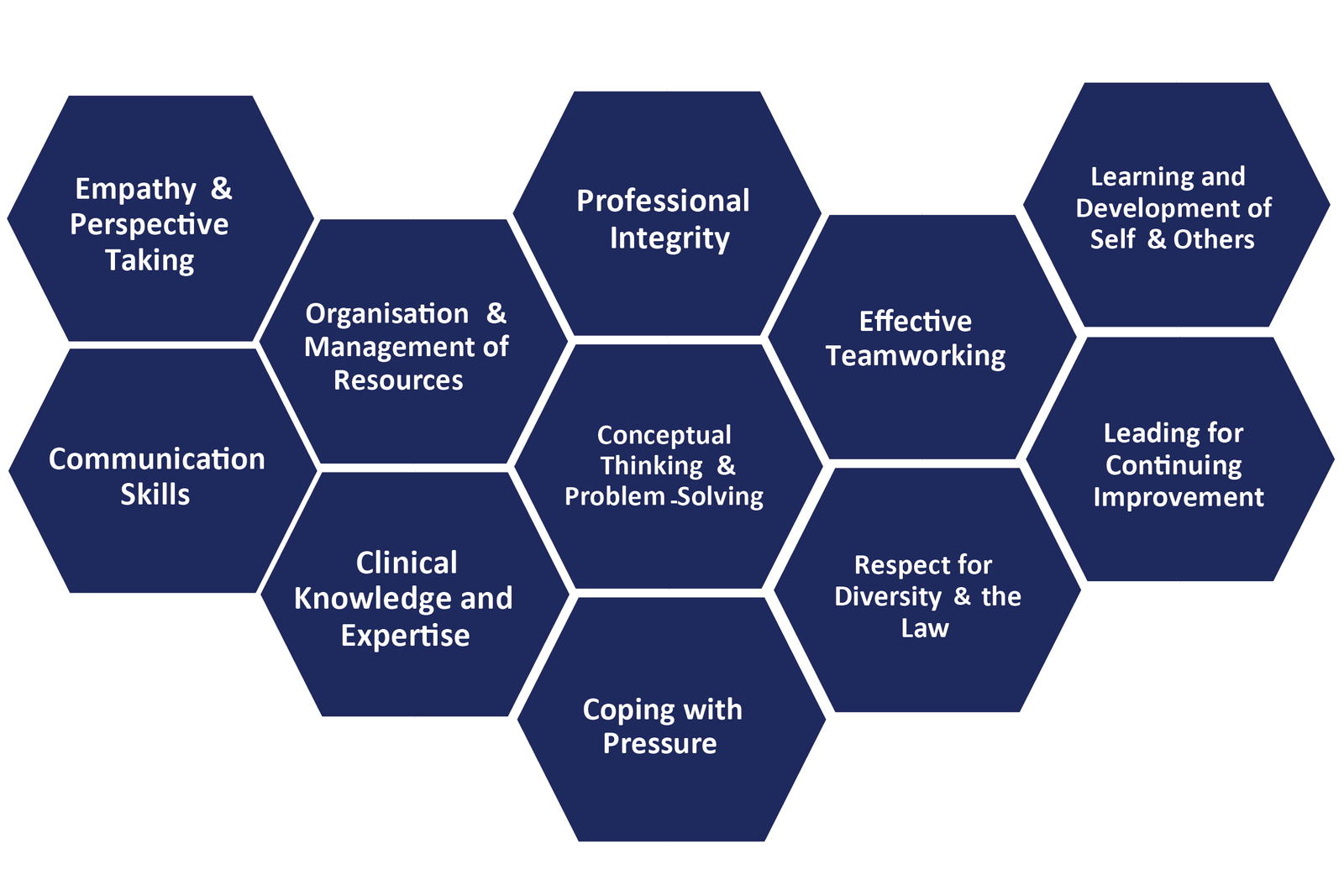
Kindly bear in mind that memorizing every detail of these domains isn’t necessary. A thorough, conceptual understanding will be invaluable as you approach the situational scenarios in the interview. To aid in recall, keep the mnemonic ECCCO PCERLL in mind, as it represents the key names of these domains.
• Demonstrates the ability and willingness to comprehend situations from the perspectives of patients and colleagues, approaches interactions with openness and without bias.
• Considers the full spectrum of patient care including social, psychological, and emotional aspects within the context of the broader healthcare environment.
• Practices patient-focused care, recognizing the uniqueness of each patient; encourages patient participation in their own health management.
• Maintains transparency with others; acknowledges errors; treats individuals respectfully and understands the separation between personal and professional boundaries.
• Balances moral challenges considering service demands, resource limitations, and expectations.
• Commits to equitable care for all patients and strives to prioritize the patient's welfare.
• Demonstrates leadership qualities and organizational insight; represents the medical profession with integrity.
• Dedicated to enhancing care quality; aligns with the needs of the local populace and manages health services efficiently.
• Balances patient care with understanding the broader impact on population health.
• Possesses an understanding of business acumen including financial, budgetary management, and the value of healthcare services.
You cannot copy content of this page